Changbaishan: Heavenly Lake on the North Korean Border
A volcanic crater lake straddling the China-North Korea border, natural hot springs in -30°C, and China\'s best powder skiing — Changbaishan is Dongbei\'s wildest destination.
4–5 Days
The right amount of time for the Heavenly Lake, skiing at Wanda Resort, and the Korean border experience.
Changbaishan → Yanji
Fly into Changbaishan Airport — a dormant volcano on the China-North Korea border with China's best powder skiing.
Heavenly Lake, Volcanic Hot Springs, Powder Skiing
The world's highest volcanic crater lake, outdoor hot springs in -20°C, and dry powder on 43 runs.
The Journey
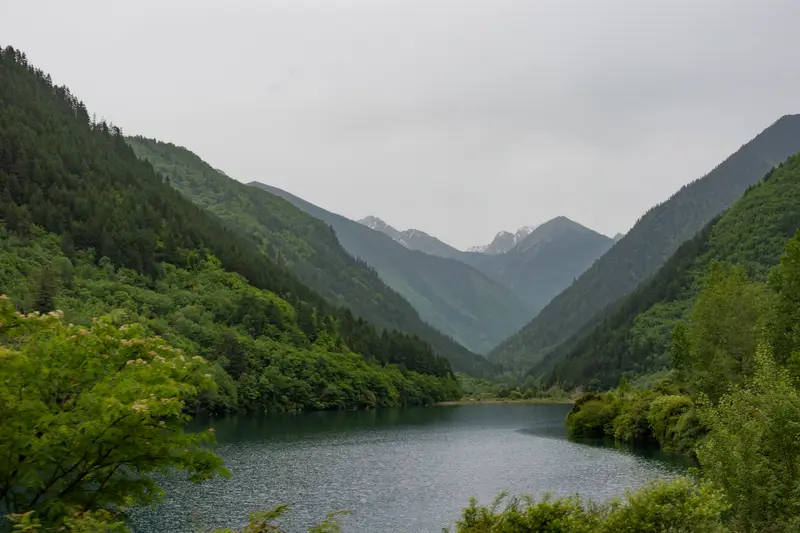
Changbaishan (长白山, \'Ever-White Mountain\') is a dormant volcano on the China-North Korea border. Its crater lake, Tianchi (天池, \'Heavenly Lake\'), sits at 2,189m and is the world\'s highest volcanic crater lake. The mountain is sacred to both Koreans (who consider it the birthplace of the Korean people) and Manchus (who considered it their ancestral homeland). In winter, Changbaishan offers China\'s best powder skiing at the Wanda Resort. In summer, it is a cool escape with wildflowers and alpine scenery. The North Korean border runs through the middle of the lake — you can literally look into North Korea from the viewing platform.
Day 1: Arrive Changbaishan
Fly into Changbaishan Airport (NBS) from Beijing (2 hrs), Shanghai (3 hrs), or Harbin (1 hr). The airport is 30 minutes from the Wanda Resort (万达度假区) — a ski resort town with hotels, restaurants, and hot springs. Check into your hotel. Afternoon: explore the resort, rent ski gear for tomorrow. Evening: outdoor hot springs — soaking in 40°C volcanic water while the air temperature is -20°C, steam rising into the pine forest.
Local tip: Changbaishan Airport (NBS) is small — 2-3 flights per day in winter, more in summer. Book flights 2-3 weeks ahead. The Wanda Resort is a purpose-built ski town (opened 2012) with international-standard hotels (Hyatt, Westin, Holiday Inn). It is expensive by Chinese standards but convenient. The hot springs are genuine volcanic springs — the water is rich in minerals and comes out of the ground at 60°C.
Day 2: Changbaishan — Heavenly Lake (Winter)
Take a 30-minute bus from Wanda Resort to the Changbaishan Western Slope entrance. In winter, the mountain is accessed by snowmobile from the shuttle bus stop to the crater rim. The ride is 10 minutes at -25°C — cover every inch of skin. At the rim, you emerge at the Heavenly Lake viewing platform at 2,189m. The lake is frozen solid from November to June — a white disc surrounded by black volcanic peaks. The wind at the rim is brutal (-30°C with wind chill). Spend 15-20 minutes (that is all you will manage in the cold), then snowmobile down. Afternoon: hot springs to recover. Evening: Korean BBQ (Changbaishan has a large ethnic Korean population).
Local tip: Heavenly Lake is visible about 30% of the time — clouds and snow close the mountain frequently. Check the forecast and go on the clearest day of your trip. The mountain opens at 8am — go early for the best visibility. The wind at the crater rim is the most intense cold you will ever experience. Seriously — ski goggles, balaclava, everything covered.
Day 3: Changbaishan Skiing
Full day skiing at Wanda Changbaishan International Resort. The resort has 43 ski runs across 5 mountains, with a vertical drop of 387m. The snow is dry powder (Changbaishan gets 1-2m of natural snowfall annually) — the best in China. The resort has a gondola, chairlifts, and magic carpets for beginners. Ski rental is available at the resort including skis, boots, poles, and helmet. Afternoon: snowmobile tour through the birch forest or a dog sled ride. Evening: Korean BBQ and soju.
Local tip: Wanda Changbaishan ski passes are higher in peak season (December-February) and more affordable in shoulder season. The resort is less crowded than Yabuli (Harbin) and the snow quality is better. The runs are intermediate-friendly — not extreme terrain. The resort has English-speaking instructors.
Day 4: Changbaishan → Yanji (Optional)
Option A: morning skiing or hot springs, then fly out from Changbaishan Airport. Option B: drive 3 hours to Yanji (延吉) — the capital of the Yanbian Korean Autonomous Prefecture. Yanji is a Chinese city that feels Korean: street signs in Chinese and Korean, Korean BBQ on every corner, and locals speaking Korean as their first language. Visit the Yanbian University area for Korean street food — tteokbokki (spicy rice cakes), kimbap (seaweed rice rolls), and naengmyeon (cold noodles). The Yanbian Korean culture is a unique Dongbei experience.
Local tip: Yanji is a fascinating cultural hybrid. The ethnic Koreans in Yanbian are Chinese citizens but speak Korean, watch South Korean TV, and maintain Korean cultural traditions. The Korean food in Yanji is authentic — many restaurants are run by families who have been in Dongbei for generations. The city is 30 minutes from the North Korean border (Tumen).
Day 5: Yanji → Depart
Morning: visit the Tumen border area (图们) — a bridge across the Tumen River where you can look into North Korea (the city of Namyang is visible). The border observation deck has telescopes pointed at the North Korean side. Afternoon: fly out from Yanji Chaoyangchuan Airport (YNJ) or take the 2-hour high-speed train to Changchun for connections.
Local tip: The Tumen border observation deck is a strange experience — Chinese tourists taking selfies while North Korean soldiers patrol the opposite bank. You can see Namyang's houses, a statue of Kim Il-sung, and sometimes people going about their day. It is the closest most people will get to North Korea.
This is a suggested itinerary. Every journey we design is tailored to your interests, pace, and budget.
Ready to Plan Your China Journey?
Tell us about your dream trip. We will send you a personalized proposal — no obligation, no pressure.
Or call us: +44 20 XXXX XXXX