Daocheng Yading: The Last Shangri-La
Three sacred snow mountains at 6,000m, turquoise glacier lakes, and Tibetan plateau grasslands — Sichuan\'s wildest landscape, 800 km west of Chengdu.
7-8 Days
An epic journey from Chengdu to 4,700m — Sichuan's wildest and most remote landscape.
Chengdu → Kangding → Litang → Yading
800 km west of Chengdu on the G318 highway — China's Route 66 to Tibet.
Three Sacred Peaks, Milk Lake, Five-Color Lake
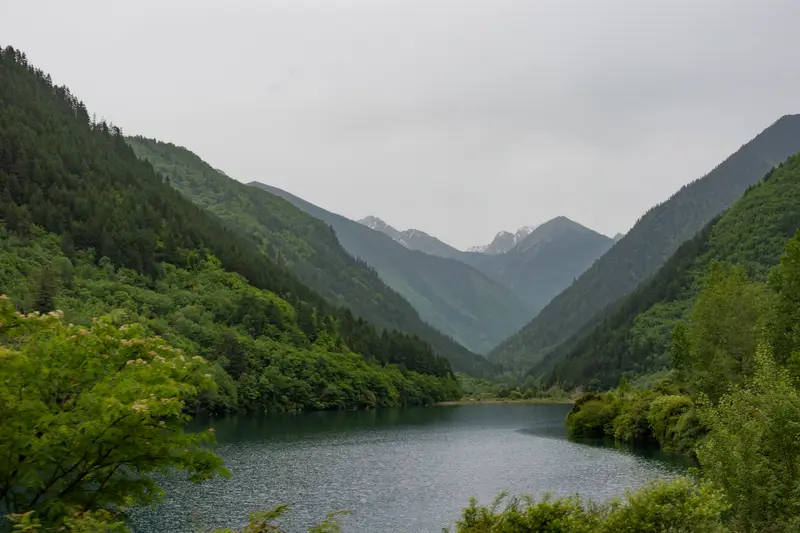
Chenrezig (6,032m), Jampelyang (5,958m), and Chanadorje (5,958m) ring glacier-fed lakes so blue they look Photoshopped.
The Journey
Daocheng Yading (稻城亚丁) is what happens when you cross the Tibetan Plateau with Yosemite. Three sacred peaks — Chenrezig (6,032m), Jampelyang (5,958m), and Chanadorje (5,958m) — ring a valley of glacier-fed lakes so blue they look Photoshopped. The route from Chengdu climbs from 500m to 4,700m over the Tibetan Plateau, passing through Kangding (the gateway to Tibetan Sichuan), Xinduqiao (the \'photographer\'s paradise\'), and Litang (a 4,000m grassland town that\'s the birthplace of the 7th Dalai Lama).
Day 1: Chengdu → Kangding (2,560m)
Drive 4.5 hours west from Chengdu on the G318 highway. The road climbs through the Erlangshan Tunnel (8.6 km, China's longest high-altitude tunnel) and emerges into a completely different world — Tibetan prayer flags, stone houses, and yak herds. Kangding is the historic border town between Han China and Tibet. Walk the old town and visit the Paoma Mountain.
Local tip: The G318 is the 'National Highway 318' — China's Route 66 from Shanghai to Tibet. The Chengdu-Kangding section is paved and well-maintained. A private car with driver can be arranged through your hotel or travel agent.
Day 2: Kangding → Xinduqiao → Litang (4,014m)
Cross the 4,298m Zheduo Pass — the first time you break 4,000m. Stop at Xinduqiao, a small Tibetan town famous among Chinese photographers for the golden poplar trees and distant snow peaks. Continue to Litang through the 4,700m Kazila Pass. Litang is one of the world's highest towns at 4,014m — the sky is a deeper blue and you'll feel the altitude. Visit the Litang Monastery and the grasslands outside town.
Local tip: Litang is where you really feel the altitude. Take diamox if you have it. Drink 3-4 litres of water. Don't shower on your first night at 4,000m+ (the steam and heat can trigger altitude sickness). The Litang Monastery was founded in 1580 and is the largest Gelugpa monastery in southern Sichuan.
Day 3: Litang → Daocheng (3,750m)
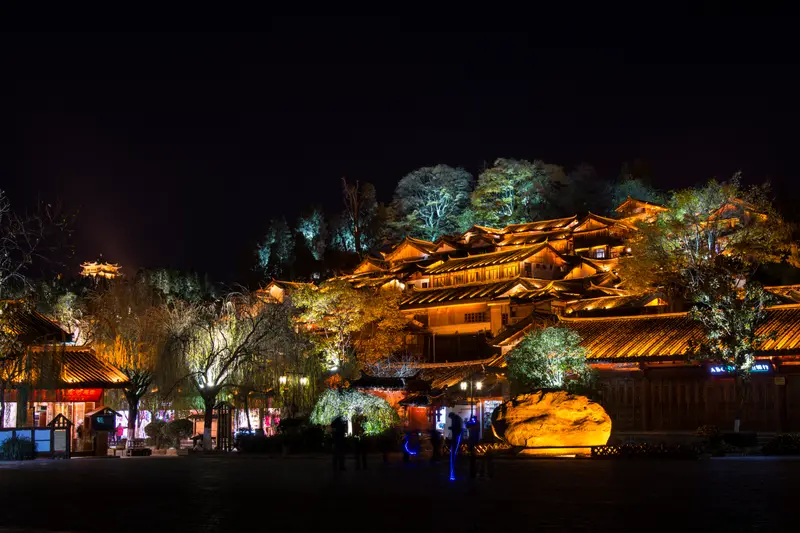
Drive 3 hours south to Daocheng. The road passes through the Haizi Mountain scenic area — a landscape of glacial boulders and 1,145 alpine lakes at 4,500m, looking like a giant scattered marbles across a moonscape. Daocheng town is a pleasant Tibetan county seat with white-walled houses and poplar-lined streets. Visit the White Pagoda Park and the Daocheng Monastery. Spend the night to acclimatise.
Local tip: Daocheng has a small airport (DCY) — the world's highest civilian airport at 4,411m. Flights from Chengdu (1 hour) land here. If you fly in, spend 2 nights in Daocheng before attempting the Yading hike to acclimatise.
Day 4: Daocheng → Yading Nature Reserve
Drive 1.5 hours to Yading (the reserve entrance is at Riwacun, 2,900m). Take the park shuttle bus 34 km into the reserve to Yading Village (3,900m) or Longlongba. Spend the afternoon on the short hike to Chonggu Monastery (3,900m) and the Pearl Lake viewpoint — your first close view of Chenrezig (6,032m) reflected in a glacial lake. This is a gentle 3 km walk to acclimatise.
Local tip: Yading has an entrance ticket and shuttle bus pass (valid for 2 days). The last shuttle into the reserve departs at 5pm — don't arrive late or you'll be stuck outside. Yading Village has basic guesthouses — electricity is from generators and hot water is limited.
Day 5: Yading — The Big Hike
Take the 7am shuttle from Yading Village to Luorong Pasture (4,180m). The hike begins here. Walk 3 km to the Horse Stop (horses available for hire), then climb 5 km on a steep rocky path to Milk Lake (4,600m) — a startling turquoise lake at the foot of Jampelyang, fed by a hanging glacier. Continue 500m uphill to Five-Color Lake (4,700m) — smaller but with a colour gradient from deep blue to emerald green. The view of all three peaks from here is the money shot. Descend the same way. Total: 10 km, 6-8 hours.
Local tip: Start by 7:30am. The weather turns by 2pm — clouds roll in and the peaks disappear. Bring 2L water, high-energy snacks, and rain gear even on sunny days. The last section to Five-Color Lake is a 100m climb on loose rock — poles help. If you're struggling with altitude, skip Five-Color Lake — Milk Lake is the better view.
Day 6: Yading → Daocheng
Morning: short walk to Xiannairi Snow Mountain viewpoint or the lower section of the valley. Take the shuttle bus out of the reserve by noon. Drive back to Daocheng. Afternoon: hot springs in Daocheng County — the Rupuchaka Hot Springs are natural sulphur pools and the perfect post-hike reward.
Local tip: The Daocheng hot springs are in Rumuchu Village, 5 km from town. The outdoor pools have mountain views. Bring your own towel and swimsuit — rental ones are questionable.
Day 7: Daocheng → Chengdu
Fly from Daocheng Yading Airport (DCY) to Chengdu (1 hour) — the takeoff at 4,411m is an experience in itself. Or drive back via the southern route through Xiangcheng and Shangri-La (2 days). Evening in Chengdu: celebratory hot pot.
Local tip: Daocheng Airport flights are frequently delayed or cancelled due to high winds and low visibility. Book a morning flight (best conditions) and have a buffer day. The drive back to Chengdu takes 2 days via the southern route.
This is a suggested itinerary. Every journey we design is tailored to your interests, pace, and budget.
Ready to Plan Your China Journey?
Tell us about your dream trip. We will send you a personalized proposal — no obligation, no pressure.
Or call us: +44 20 XXXX XXXX