Hong Kong & Macau: Two Cities, Two Worlds
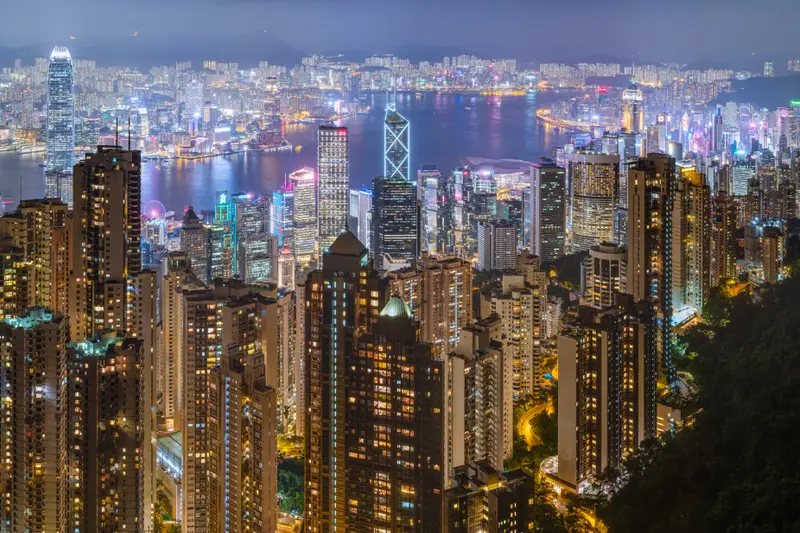
Hong Kong\'s Victoria Harbour skyline and dim sum temples, plus Macau\'s Portuguese tiles, egg tarts, and casinos — two former European colonies, now China\'s most distinctive cities.
4–5 Days
The perfect pace for two of China's most distinctive cities — dim sum, hiking, and Portuguese egg tarts.
Hong Kong → Macau → Hong Kong
Connected by a 1-hour TurboJET ferry every 15-30 minutes. Hong Kong has a world-class international airport.
Victoria Peak, Star Ferry, Ruins of St. Paul's
The world's most dramatic skyline, a 130-year-old ferry, and a 17th-century Jesuit facade.
The Journey
Hong Kong and Macau are China but not quite China — they are Special Administrative Regions with their own currencies, legal systems, and border controls. Hong Kong needs no introduction: the most dramatic skyline in the world, the best dim sum on earth, and surprisingly good hiking. Macau is the former Portuguese enclave where pastel-coloured colonial buildings sit next to the world\'s largest casinos, and where the food is a 400-year-old fusion of Portuguese and Cantonese. They are 1 hour apart by ferry, making a combined trip natural.
Day 1: Hong Kong Island
Start at Victoria Peak (太平山) — take the Peak Tram (est. 1888) to the top for the classic Hong Kong skyline view. Walk the Peak Circle Walk (3.5 km, 1 hour) for 360° views. Descend to Central and walk the Mid-Levels Escalators — the world's longest outdoor covered escalator system (800m), past bars, galleries, and noodle shops. Lunch: dim sum at Tim Ho Wan (添好运, the world's most affordable Michelin-starred restaurant). Afternoon: Man Mo Temple (文武庙, free), dedicated to the gods of literature and war, with giant incense coils hanging from the ceiling. Evening: Star Ferry across Victoria Harbour (10 min, running since 1888) to Tsim Sha Tsui. Watch the Symphony of Lights (8pm) from the TST waterfront.
Local tip: The Peak Tram queue can be 1-2 hours in peak times. Take the bus (Bus 15 from Exchange Square, 30 min) instead — it winds up the mountain through the forest and drops you at the same place. The Star Ferry costs a few coins for the crossing — upper deck and lower deck available. Pay with Octopus card or coins. Do the crossing at sunset.
Day 2: Kowloon & New Territories
Morning: Kowloon — visit the Wong Tai Sin Temple (黄大仙祠, free), where locals shake fortune sticks to predict their future. Then the Chi Lin Nunnery (志莲净苑, free) — a Tang dynasty-style Buddhist temple complex with lotus ponds and immaculate gardens, flanked by a modern skyscraper (startling contrast). Lunch: wonton noodle soup at Mak's Noodle (麦奀云吞面) — a Hong Kong institution serving delicate shrimp wontons in a clear, fragrant broth. Afternoon: hike the Dragon's Back (龙脊, 2-3 hours) — Hong Kong's most famous trail along a ridge with views of beaches, islands, and the South China Sea. Evening: Temple Street Night Market (庙街夜市) for fortune tellers, street opera, and claypot rice.
Local tip: Hong Kong has world-class hiking. The Dragon's Back is a 2-3 hour trail rated moderate, with ocean views the whole way. It ends at Big Wave Bay beach — bring a swimsuit. The trailhead is a 15-minute bus ride from Shau Kei Wan MTR station. Hong Kong is 40% country park — you can go from skyscraper to rainforest in 30 minutes.
Day 3: Hong Kong → Macau
Morning: take the 1-hour TurboJET ferry from Hong Kong Macau Ferry Terminal (Sheung Wan) to Macau. Macau was a Portuguese colony from 1557-1999. Start at Senado Square (议事亭前地) — a wave-patterned cobblestone plaza surrounded by pastel-coloured colonial buildings. Walk to the Ruins of St. Paul's (大三巴牌坊, free) — the 17th-century facade of a Jesuit church that burned down in 1835, now Macau's symbol. Visit the Macau Museum inside the Monte Fort for the city's history. Lunch: Portuguese egg tart (葡式蛋挞) at Lord Stow's Bakery — the flaky, caramelised version that is Macau's most famous food. Afternoon: Taipa Village — a quieter area of pastel houses, narrow lanes, and the Taipa Houses-Museum. Evening: casino walk on the Cotai Strip (the Venetian, the Parisian — Macau's casinos are 3x Las Vegas's revenue).
Local tip: Macau's Portuguese egg tarts were invented by Andrew Stow, an Englishman who opened a bakery in Coloane in 1989. The original Lord Stow's is in Coloane Village (a 20-minute bus from the city centre). The tart is slightly burnt on top (caramelised) with a flaky pastry — different from the Cantonese egg tart's smooth top and shortcrust pastry. Eat at least 3-4 — they're small and irresistible.
Day 4: Macau → Hong Kong → Depart
Morning: A-Ma Temple (妈阁庙, free) — Macau's oldest temple (1488), dedicated to the sea goddess Mazu (Macau's name comes from 'A-Ma Gau' — 'Bay of A-Ma'). Visit the Macau Tower for the 360° view from 338m, or walk the Coloane Village — Macau's southernmost island with a fishing village atmosphere, pastel houses, and the original Lord Stow's Bakery. Afternoon: ferry back to Hong Kong (1 hr). Fly out from Hong Kong International Airport (HKG).
Local tip: Macau's casinos run free shuttle buses ('casino express') between the ferry terminal, border gate, and airport. You don't need to gamble to use them. The Venetian-Taipa route is the most useful. The buses are free, comfortable, and more frequent than public buses.
This is a suggested itinerary. Every journey we design is tailored to your interests, pace, and budget.
Ready to Plan Your China Journey?
Tell us about your dream trip. We will send you a personalized proposal — no obligation, no pressure.
Or call us: +44 20 XXXX XXXX